Energy-efficient hot water
Heat Pump Hot Water Systems in New Zealand
A hot water heat pump uses electricity to move heat from the surrounding air into your cylinder, rather than generating all of that heat with an element. For many New Zealand households it is one of the most effective ways to reduce hot-water energy use without changing how the home uses hot water day to day.
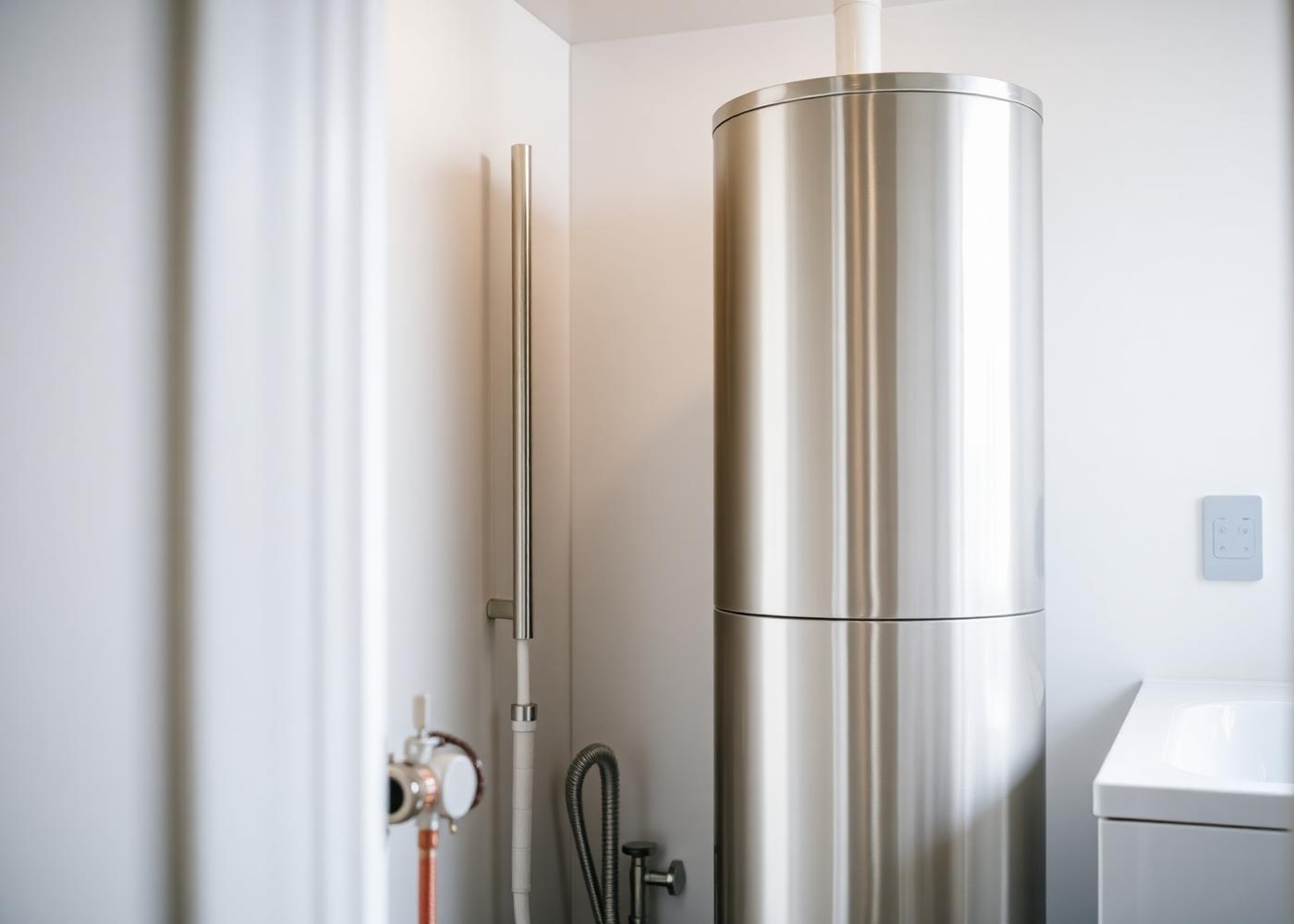
At a glance
Heat Pump Hot Water — key points
- Suited to replacing ageing electric cylinders
- Often considered when moving away from gas
- Integrated and split-system configurations
- Sizing based on household hot-water demand
- Outdoor or ventilated space required
- Installation by qualified professionals only
What is heat pump hot water?
A heat pump water heater works on the same principle as a refrigerator running in reverse. A fan draws in ambient air, a refrigeration cycle extracts the heat energy from that air, and the heat is transferred into the water stored in the cylinder.
Because the system moves existing heat rather than creating all of it with a resistive element, it can deliver several units of heat energy for each unit of electricity used. Real-world performance depends on climate, installation location, system design and household usage.
Integrated vs split systems
Integrated (all-in-one) units combine the heat pump and the storage cylinder in a single outdoor package. They are typically simpler to install where there is suitable outdoor space and existing pipework can be adapted.
Split systems place a compact heat pump unit outside and keep the cylinder in its existing indoor location. These are often considered where the cylinder cupboard needs to remain internal, or where outdoor space is limited.
Which households may suit heat pump hot water?
Heat pump hot water is most often considered by households replacing an old electric cylinder, homes with consistently high hot-water usage, and owners looking to reduce ongoing energy costs on a long-term basis.
It is not automatically the right choice for every property. Available space, ventilation, noise considerations, electrical capacity, climate and household demand all matter. A qualified installer should assess the property before any decision is made.
- Families with high daily hot-water demand
- Homes with an ageing or failing electric cylinder
- Owners planning long-term energy-efficiency improvements
- New builds designed around efficient services
- Properties moving away from bottled or reticulated gas
Sizing and installation considerations
System sizing is driven by the number of people in the home, peak demand patterns and the recovery rate of the unit. Undersizing leads to running out of hot water; oversizing adds unnecessary cost and space requirements.
Installers will also consider the outdoor unit position, airflow clearances, condensate drainage, noise relative to bedrooms and neighbours, electrical supply, seismic restraint, tempering valve requirements and compliance with New Zealand plumbing and building requirements.
Replacing an existing system
Most heat pump hot water installations in New Zealand are replacements rather than new builds. Converting from a low-pressure cylinder usually involves upgrading pipework and valves as part of moving to a mains-pressure system.
If you are replacing a gas califont, the conversion also involves decommissioning the gas appliance and confirming that the electrical supply is suitable. Your installer can explain what is involved for your specific property.
Questions
Frequently asked questions
How efficient is a hot water heat pump?
Efficiency is usually described as a coefficient of performance (COP) — the ratio of heat delivered to electricity used. Manufacturers publish COP figures tested under set conditions; actual performance varies with air temperature, installation quality and household usage patterns.
Do heat pump water heaters work in cold parts of New Zealand?
Most systems sold in New Zealand are designed to operate across local climate conditions, with an electric element for backup or boost. Performance is generally lower in colder ambient temperatures, so system selection matters more in colder regions. An installer can advise on suitable models.
Are they noisy?
A heat pump water heater includes a fan and compressor, so it produces some operating noise similar to an air conditioner outdoor unit. Placement away from bedroom windows and boundaries is an important part of the installation design.
Can I install one myself?
No. Hot-water installation work in New Zealand involves regulated plumbing and electrical work and must be carried out by appropriately qualified and licensed professionals.
Ready to upgrade your hot water?
Tell us what you need and we'll connect you with a suitable independent hot-water professional in your area.
No obligation. Free to request. Your details may be shared with a suitable independent provider so they can respond.